
Medically reviewed by Dr. Steven Hamlett, Au.D., Abilene Audiology
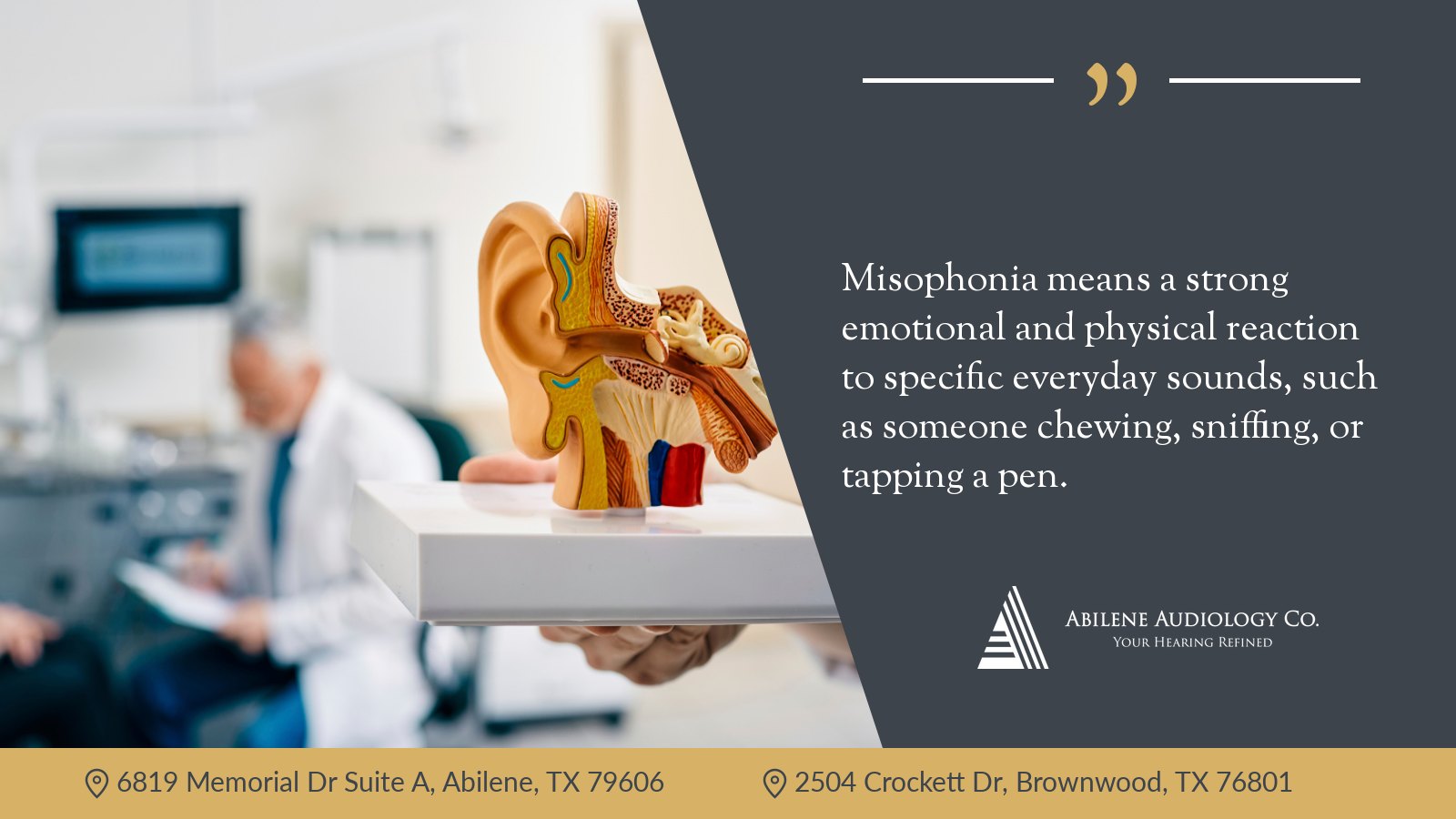
Misophonia means a strong emotional and physical reaction to specific everyday sounds, such as someone chewing, sniffing, or tapping a pen. The word comes from Greek roots that translate to "hatred of sound."
Misophonia is a strong reaction to specific sounds, such as chewing or tapping. These sounds can set off sudden anger or anxiety even when they are soft, and the reaction is hard to control.
What Misophonia Feels Like: Common Triggers and Reactions
Misophonia feels like an instant, outsized reaction to a small, ordinary noise. Triggers differ from person to person, but these come up often:
- Chewing or crunching
- Slurping or lip smacking
- Breathing or sniffing
- Nose blowing
- Throat clearing
- Coughing
- Pen clicking, typing, and repetitive finger or foot tapping
- Ticking clocks and other repeated mechanical sounds
The reaction can be emotional, physical, or both. Irritation turns to anger within seconds, often with disgust or anxiety and a strong urge to leave the room. The body reacts too. Muscles tighten and the heart rate goes up. Some people sweat or feel pressure in the chest.
Most people with misophonia know their anger is out of proportion. Knowing that does not turn the reaction off, and it often adds guilt.
The source of the sound makes a difference. A sound from a family member or close friend can set off a stronger reaction than the same sound from a stranger. A parent or partner chewing at the dinner table can feel unbearable, even to someone who loves them. The setting matters too, since the same sound can bother a person in one place and not in another.
Some people with misophonia also react to what they see, not only what they hear. Watching someone chew, jiggle a leg or drum their fingers can set off the same response with no sound at all. Researchers sometimes call this visual side misokinesia.
Misophonia vs. Hyperacusis, Tinnitus and Other Sound Sensitivities
Misophonia depends on the particular sound and how a person reacts to it, not on volume. A quiet sniff from across the room can trigger a reaction, while loud music often doesn't bother the same person. Some people with misophonia play music to cover their triggers. That is the main difference between misophonia and other sound problems.
With hyperacusis, the reaction follows the sound itself: how loud it is and how high or low its pitch is.
Tinnitus is hearing a sound that has no outside source. Most people describe ringing, but it can also sound like buzzing, roaring, hissing, or humming. In most cases, only the person with tinnitus can hear it. The NIDCD's tinnitus overview covers its causes and the main ways to reduce symptoms.
| Misophonia | Hyperacusis | Tinnitus | |
|---|---|---|---|
| What happens | Strong emotional reaction to specific trigger sounds | Reaction to sounds based on their volume and pitch | Hearing a sound that has no outside source |
| Does loudness matter? | Very little; quiet sounds can trigger it | Yes, the reaction follows volume and pitch | No outside sound is involved |
| Does context matter? | Yes, including who makes the sound and where | Very little | No outside sound is involved |
| Typical description | Anger, disgust or anxiety at chewing, sniffing or tapping | Ordinary sounds are hard to tolerate | Ringing, buzzing or roaring |
| Best first step | A conversation about triggers, plus a hearing evaluation | A hearing evaluation | A hearing and tinnitus evaluation |
These conditions can overlap. Misophonia can occur alongside tinnitus and hyperacusis, and in people with or without hearing loss.
Telling them apart matters because each one calls for different support. Tinnitus with hearing loss can improve with hearing aids or sound therapy devices, according to the NIDCD.
Misophonia centers on the emotional response to a trigger. Support for misophonia focuses on that response. If you aren't sure which one you have, an evaluation can tell.
Abilene Audiology offers hearing tests and tinnitus evaluations in Abilene, TX and Brownwood, TX.
What Causes Misophonia and Who Gets It
Misophonia appears to involve how the brain processes sound and emotion, although no single cause has been confirmed. Some studies have found differences in how the brain areas for hearing and emotion work together, and one theory is that this makes a harmless sound register as a threat. Misophonia occurs in people with normal hearing and in people with hearing loss. Some case reports describe it running in families, but there is not enough evidence yet to say genes play a part.
Symptoms usually first show up in childhood or early adolescence, but it can occur in adults, too.
Misophonia can occur on its own or alongside tinnitus and hyperacusis. It can also occur with other conditions, including ADHD, autism, OCD, and depression. Anxiety is a separate condition, and a person can have both.
Misophonia affects daily life. Family meals get tense. A student can't focus in a quiet classroom while a classmate clicks a pen. An office worker dreads the coworker who eats at their desk. Many people start avoiding the situations where triggers show up, including shared meals and time with friends and family. That withdrawal builds slowly, so it is easy to miss.
How Misophonia Is Assessed
Misophonia is not listed as its own diagnosis in the DSM-5-TR or ICD-11, so no single test confirms it. In 2022, an expert panel published a consensus definition that gives clinicians and researchers a shared starting point.
An assessment can include:
- A conversation about your trigger sounds, how you react, when it started, and how it affects your days.
- Questionnaires that measure how strong and how disruptive your reactions are.
- A hearing evaluation to check for hearing loss, hyperacusis, or tinnitus.
- A referral to a mental health professional for the emotional side, when it's needed.
Audiologists check hearing and sound tolerance. A hearing test can't confirm misophonia by itself. It shows whether hearing loss or tinnitus is also involved, which helps you and your other providers decide what to do next.
Mental health professionals work with the emotional response.
Coping Strategies and Treatment Options
No treatment works for everyone, but support can lower how much misophonia affects daily life.
- Ear protection. Earplugs or noise-canceling headphones can take the edge off a trigger-heavy situation.
- Background sound. White, pink or brown noise, a fan or quiet music gives your brain something else to focus on besides listening for a trigger.
- Planning ahead. Before a family meal, a long drive or a meeting, decide where you'll sit and have your headphones ready.
- Workplace accommodations. You can ask your employer about headphones or a seat away from triggers.
Mental health therapy (psychotherapy) can't cure misophonia, but it can help you identify your triggers, build coping strategies, avoid impulsive reactions, and reduce your sensitivity to existing triggers. Treating related conditions, such as anxiety or OCD, can ease misophonia symptoms as well.
Family members and partners can make a real difference. Start with an honest, calm conversation about which sounds are hardest, without blame on either side. Small changes at home help: soft music during dinner, a seat farther from the kitchen, or agree that headphones at the table are fine.
When is it time to get help? Reach out to a healthcare provider when your reactions start disrupting work, school or relationships, or when you notice yourself avoiding people and places to stay away from triggers.
Misophonia can wear on your mood. If it ever leaves you thinking about hurting yourself, you can call or text 988 at any time.
Frequently Asked Questions
Is misophonia a disorder?
Yes. The 2022 consensus definition describes misophonia as a disorder of decreased tolerance to specific sounds. It isn't listed as its own diagnosis in the DSM-5-TR or ICD-11, so there is no diagnostic code for it yet.
Can a hearing test diagnose misophonia?
No. A hearing test can't confirm misophonia by itself. It shows whether hearing loss is part of the picture, and a tinnitus evaluation can check for tinnitus and sound sensitivity.
Who gets misophonia?
Misophonia can affect children, teens, and adults. Symptoms usually first appear in childhood or early adolescence. It can occur on its own or alongside conditions such as ADHD, autism, OCD, or tinnitus.
Who can diagnose misophonia?
No professional gives a formal misophonia diagnosis because there is no diagnostic code for it. A trained provider can recognize it by asking about your trigger sounds and how you react. Audiologists check your hearing and how you tolerate sound. Mental health professionals help with the emotional side.
Can misophonia be treated?
Yes, though no treatment works for everyone. Cognitive behavioral therapy, a form of counseling, has the most evidence behind it. Many people also use background sound to cover triggers.
Next Steps for Misophonia
Start with a hearing evaluation. It shows whether hearing loss is involved, and a tinnitus evaluation checks for tinnitus and sound sensitivity. You can share the results with your doctor or therapist.
We offer hearing tests and tinnitus evaluations at our Abilene and Brownwood offices.
Call (325) 455-3404 to book with an audiologist in Abilene, TX, or (325) 327-2940 for an audiologist in Brownwood, TX. You can also request an appointment online.