
- Hearing aid lifespan typically runs 3 to 7 years, with the exact number depending on the device style, daily habits, and how well the devices are cared for.
- Behind-the-ear styles hold up longer than smaller in-canal models, and consistent professional care can add months or even a full extra year to a device’s working life.
- Abilene Audiology Co. offers hearing aid checks and repairs in Abilene and Brownwood, TX.
One of the most common questions people ask an audiologist is, “How long will my hearing aids last?” It is a fair question. Hearing aids are a real investment in your health and your quality of life, and you want to know what you are getting for it.
The short answer is 3 to 7 years. The longer answer is more useful, because that range is not luck. Style, daily habits, and the environment your devices live in all decide where you land in it. Some patients get eight years out of a pair. Others need a replacement at four.
How Long Each Style Lasts
Where a device sits changes how hard its life is. Anything worn deep in the ear canal spends all day in heat, moisture, and wax. Anything worn behind the ear does not.
Behind-the-Ear (BTE)
Sits behind the ear with a tube into the canal. Typically lasts 5 to 7 years.
Receiver-in-Canal (RIC)
Sits behind the ear with a receiver wire into the canal. Typically lasts 4 to 6 years.
In-the-Ear (ITE)
Fills the outer bowl of the ear. Typically lasts 3 to 5 years.
In-the-Canal and Completely-in-Canal (ITC / CIC)
Sit deep inside the canal. Typically lasts 3 to 5 years.
BTE devices last longest because the electronics stay outside the ear canal, away from the warm, humid, waxy environment inside it. RIC models fall in the middle. The receiver wire is usually the first part to go, and it is a replaceable component rather than a reason to replace the whole device. The smallest in-canal styles are the most discreet and the shortest-lived, which is a trade-off worth talking through before you choose.
How To Choose The Best Hearing Aid
Quality matters. Devices built by established manufacturers are made for daily wear and hold up better over years of it. Just as important is whether the device suits your hearing, your ears, and your day. A device that fits your life gets worn, cleaned, and looked after. One that does not ends up in a drawer.
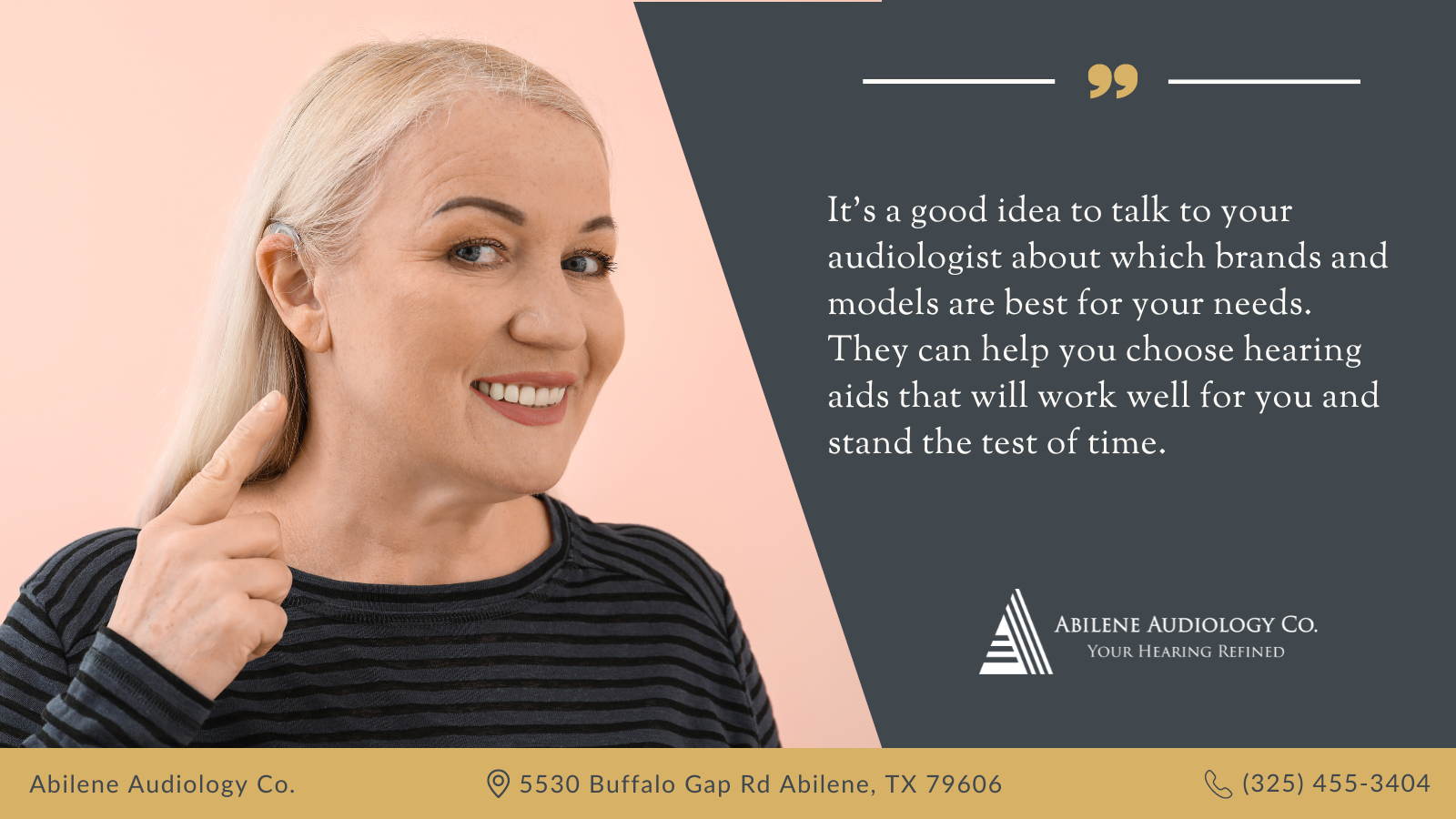
This is worth a conversation rather than a web search. Talk to your audiologist about which styles and models fit your hearing loss and your routine. You can see the range we work with on our hearing aids page.
What Actually Shortens a Hearing Aid’s Life
Moisture
Sweat, humidity, steam from a shower, and Texas summer heat all get inside the casing. Moisture is the single most common cause of early failure. A drying or dehumidifier case overnight is the cheapest protection you can buy.
Earwax
Wax blocks receivers and microphones. Left in place, it stops sound getting through and eventually damages the components behind it. Wax guards are consumable. Change them on schedule.
Battery wear
Rechargeable cells lose capacity after roughly 300 to 500 charge cycles, which is about two to three years of daily use before you notice run time dropping. That is normal, not a fault.
Heat
A hot car or a sunny windowsill degrades plastics and adhesives faster than years of ordinary wear.
Drops and pressure
Being sat on, stepped on, or dropped onto tile is a common end for an otherwise healthy device. A hard case is worth the small cost.
Taking Care of Your Hearing Aids
Good daily care is the difference between the bottom and the top of the 3 to 7 year range, and it takes about a minute a day.
Wipe each device with a soft, dry cloth every evening. Never use water, alcohol, or cleaning sprays.
Brush the microphone ports and receiver openings with the small brush that came with your devices.
Open the battery door overnight, or leave rechargeable devices in their charger.
Store them in a drying case overnight, especially in summer.
Replace wax guards on the schedule your audiologist gives you.
Take them out before showering, swimming, or using hairspray.
Why Professional Care Extends Lifespan
Home cleaning reaches the outside. A professional appointment reaches what you cannot: deep wax in the receiver, moisture inside the casing, tubing that has hardened, and components that are starting to fail before they take the surrounding circuits with them.
Think of it the way you think about an oil change. Skipping it saves time now and costs more later. Devices that get consistent professional attention reach the top of their expected lifespan far more reliably than devices only ever cleaned at home.
Frequently Asked Questions
How long do hearing aids last on average?
Most hearing aids last 3 to 7 years with normal use and care. Behind-the-ear styles sit at the higher end of that range. Smaller, fully in-canal devices wear out sooner because they live inside the ear, where heat and moisture are constant.
Can hearing aids be repaired instead of replaced?
Often, yes. Receivers, wax guards, tubing, and batteries are all serviceable parts. Repair stops making sense when the running cost approaches half the price of a new device, or when the device is too old to support your current prescription. Your audiologist will tell you honestly which side of that line you are on.
How do I make my hearing aids last longer?
Store them in a drying case overnight, replace wax guards on schedule, and keep them away from water and heat. Have them professionally cleaned at least once a year. Do not leave them in a hot car or in direct sunlight.
What happens to rechargeable batteries over time?
Rechargeable cells lose capacity after roughly 300 to 500 charge cycles, or about two to three years of daily use, and run time starts to drop. That does not always mean a new device. Ask your audiologist whether a battery service is an option for your model.
Does insurance or Medicare cover a replacement?
Coverage varies a great deal by plan. Learn more about Medicare hearing aid coverage and benefits.
Book a Hearing Aid Check
If your devices are past three years old, or you have noticed sound getting less clear, a professional check is the fastest way to know whether a service or a replacement is the right call. We will look at your devices alongside your current hearing and give you a straight answer.
We see patients at both our Abilene, TX and Brownwood, TX offices.
Schedule your appointment today!